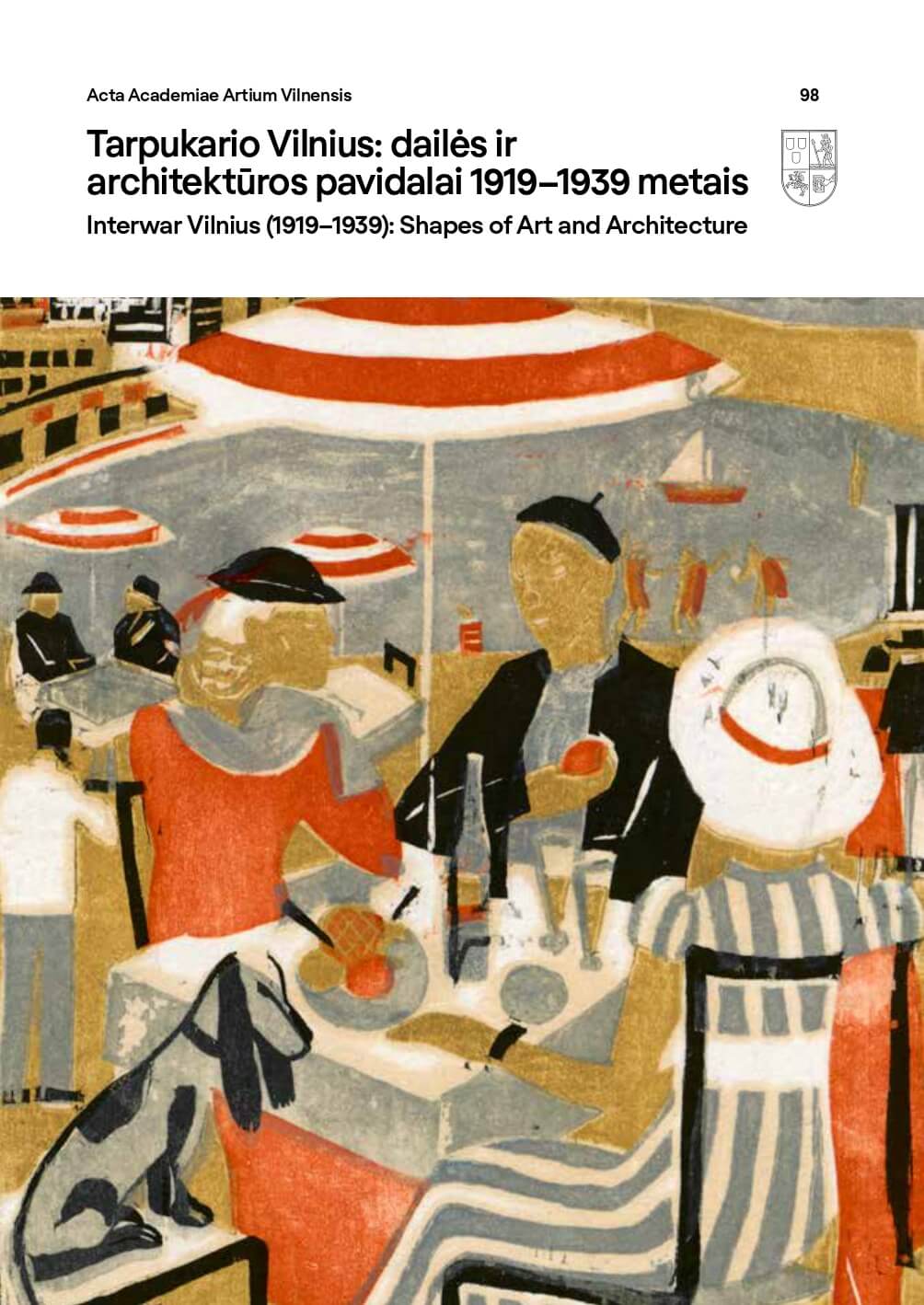
In the recent years, Vilnius art and architecture of the interwar period has been receiving increasingly more interest both in Lithuania and the neighbouring countries (above all, Poland). Today, the theme of Vilnius modernism acquires special relevance as it encourages us to analyse the art and architecture of Vilnius and the Vilnius region in 1919–1939 as part of the common history of European modernism, and brings out the local features of cultural modernisation.
The aim of the conference is to bring together specialists in various fields (art history and theory, architecture and heritage) and try to answer the questions: did the Vilnius modernism exist, and what was it like? How is it related to the local tradition and heritage? What reasons might have determined the formation (or lack of it) of the Vilnius modernism? What was the role of state institutions or private individuals in shaping the processes of art, architecture and heritage protection? By raising these and other questions, we aim to discuss the most relevant interlacement points of Vilnius modernism in art, architecture and heritage in 1919–1929.
Vilniaus tarpukario dailė ir architektūra pastaraisiais metais sulaukia vis didesnio susidomėjimo tiek Lietuvoje, tiek ir kaimyniniuose kraštuose (pirmiausia Lenkijoje). Vilnietiško modernizmo tema skatina paanalizuoti 1919–1939 m. Vilniaus ir Vilniaus krašto dailę bei architektūrą kaip bendrą Europos modernizmo istorijos dalį, kartu išryškinti savitus vietos kultūros modernizacijos bruožus.
Šiame Acta Academiae Artium Vilnensis tome publikuojami įvairių sričių (dailės istorijos ir teorijos, architektūros, paveldo) specialistų tyrinėjimai, kuriuose siekiama atsakyti į klausimus: ar buvo (koks buvo) vilnietiškas modernizmas? kokios jo sąsajos su vietos tradicija ir paveldu? kokios priežastys galėjo lemti vilnietiško modernizmo (ne)susiklostymą? koks buvo valstybės institucijų ar pavienių asmenų vaidmuo formuojant dailės, architektūros ir paveldosaugos procesus?
Lietuvos ir Lenkijos tyrėjų bendromis pastangomis atveriamos naujos tarpukario Vilniaus dailės ir architektūros istorijos atodangos parodo, kaip dailininkų, architektų, dailės ir architektūros restauratorių bei konservatorių darbai tampa miesto ir miestiečių gyvenimo kultūrine savastimi, politinių realijų artefaktais ar iškalbingais vizualiniais dokumentais.
In recent years, there has been a growing interest in the art of the Interwar period in Vilnius, and this trend can now be observed not only in Lithuania but in the neighbouring countries as well (primarily Poland). The topicality of Vilnius modernism motivates us to consider its Interwar period art and architecture as belonging to the history of European modernism as a whole.
This issue of Acta Academiae Artium Vilnensis introduces a col lection of papers by researchers from a wide range of areas (including art history, art theory, architecture, and heritage studies). Their research re volves around just as wide a range of questions: Was there such a thing as Vilnius modernism, and what were its traits? What was its relation to local traditions and heritage? What brought it into existence (if it was there in the first place)? What roles did the state institutions and individuals play in art, architecture, and heritage?
The joint efforts of Lithuanian and Polish researchers have opened new vistas of historical research into the art and architecture of Interwar Vilnius. They show us how the efforts of artists, architects, restorers, and conservationists were reflected in the cultural identity of the city and its citizens, the political artefacts, and other telling visual documents.